Class Shame and Alienation from Home
Great ExpectationsClass Shame and Alienation from Home describes a central moral and emotional change in Pip: after encountering Estella and the world of Miss Havisham, he learns to view his working-class home through the contempt he fears they would direct at it. The forge and kitchen that had once promised belonging and independence become, in his imagination, evidence of being common. The change brings aspiration, but also ingratitude and a painful separation from Joe, whose faithful influence Pip later understands as the best part of his apprenticeship.
From Home to Social Disgrace
Pip’s alienation takes hold after he has visited Miss Havisham’s house and encountered Estella’s disdain. At night he measures the people and rooms of home against the world he has just glimpsed: Joe is merely a blacksmith, with thick boots and coarse hands; his sister and Joe remain in the kitchen, while Miss Havisham and Estella seem far above such common life. The comparison makes a brief visit feel, in retrospect, like a much longer separation. Pip falls asleep recalling the visit as if it were already a distant past, a sign of how quickly the encounter has reorganized his sense of himself and his home.
The remembered household had not always seemed mean to him. Although his sister’s temper had made home unpleasant, Joe had given its ordinary spaces dignity in Pip’s imagination. The best parlour had seemed an elegant saloon, the front door a solemn portal, the kitchen a modest but respectable room, and the forge a glowing road to manhood and independence. Within a year, Pip says, those meanings had changed: the same places now seemed coarse and common, and he could not bear the thought of Miss Havisham and Estella seeing them. His shame therefore alters not the house itself but the scale by which he judges it.
Pip’s later narration refuses to assign the change to a single cause. He considers how much may have been his own fault, how much Miss Havisham’s, and how much his sister’s, but insists that the transformation had happened regardless of whether it was excusable. That retrospective qualification matters: the adult narrator recognizes the force of the influences around the boy without treating them as an excuse for the boy’s conduct.
Apprenticeship and the Fear of Exposure
When Pip becomes Joe’s apprentice, an old expectation collapses. He once imagined that rolling up his sleeves and entering the forge would make him distinguished and happy. Faced with the work itself, he instead feels dusty with small-coal dust, and the daily prospect seems to weigh more heavily on him than the anvil. He describes his apprenticeship as a road stretching straight ahead beneath a curtain that shuts out interest and romance. The disappointment is sharpened by the contrast between the future he had once imagined and the working life now within his grasp.
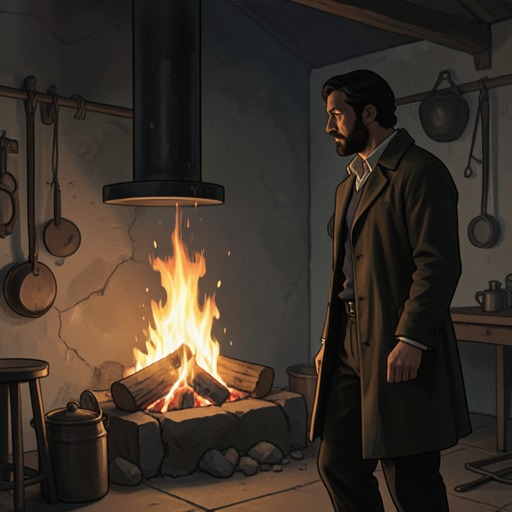
The fear beneath that disappointment is specifically social. Pip cannot say exactly what he wanted, but he knows what he dreaded: that Estella might see him at his grimiest, black-faced and black-handed, doing the coarsest work at the forge, and despise him. As he works the bellows with Joe and they sing Old Clem, he imagines her face in the fire, scorning him. The forge’s windows become panels of black night in which he thinks he might see her looking in. When he returns to supper, the familiar meal and place seem more homely than ever, and that very homeliness intensifies his shame.
Yet Pip does not run away or complain to Joe during his apprenticeship. His adult account is careful not to claim much virtue for this endurance: he says that he worked against the grain because Joe possessed a strong sense of industry, and that whatever good entered his apprenticeship came from Joe’s plain contentment rather than Pip’s restless discontent. The contrast makes the forge more than a symbol of class limitation. It is also the setting in which Joe’s steady example continues to shape Pip, even while Pip resents the life that example sustains.
Aspiration, Self-Deception, and Separation
When Pip learns that he has great expectations, his new prospects do not immediately bring ease. As Joe and Biddy regain their cheerful composure and talk about his departure, Pip becomes gloomy and suspects that, without knowing it, he may be dissatisfied with himself. Their pleasant looks can feel like mistrust to him, though neither says or signals anything unkind. Even the stars above the kitchen door appear, to his altered eye, humble for shining on the rustic world in which he grew up. His social aspiration has begun to turn affection into a source of discomfort.
Pip also constructs a romantic explanation for his future. He imagines Miss Havisham as his patroness, assumes that she has as good as adopted him, and supposes that she means to bring him and Estella together. In this private fantasy he is the young knight who will restore the decaying house, relight its rooms and hearths, and marry the princess. The fantasy makes social advancement seem like a destined escape from the world of Joe’s forge. But Pip’s later account corrects the romance: he loved Estella because he found her irresistible, not because he believed her perfect, and he continued to love her despite knowing that the attachment worked against his hope, happiness, and peace. His desire for a different life is thus bound to an attachment that offers no assurance of acceptance.
The decisive reversal comes when Pip discovers that Miss Havisham’s supposed plans for him were only a dream and that Estella was not intended for him. He understands that he had been kept at Satis House as a convenience and used as a target for Estella’s emotional practice. But his sharpest pain is that, in pursuing the life he imagined, he has deserted Joe for the sake of a convict whose crimes he does not even know. The collapse of his expectations exposes the human cost of his earlier shame: the home he considered beneath him had been the place of loyalty he abandoned.
Recognition and Moral Consequences
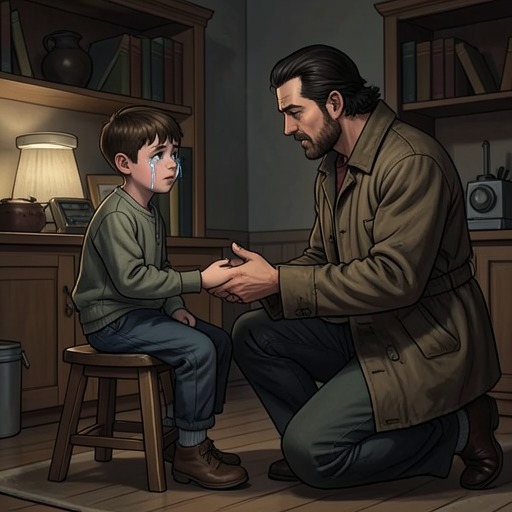
After Pip’s great expectations have dissolved, Joe returns to care for him. The tact with which Joe avoids pressing painful subjects, and Biddy’s kindness in preparing him for the visit, make a deep impression on Pip. He cannot tell whether Joe understands how poor he has become or that his expectations have vanished, but the uncertainty does not diminish the tenderness of their consideration. The marsh mists, once part of Pip’s bleak comparisons between his life and the landscape, now supply an image for the dissolution of his imagined fortune.
Pip’s alienation also leaves a lasting mark on his relationship with Joe. During Pip’s illness, Joe falls into their old affectionate way of speaking, and Pip is grateful to hear the familiar names again. As Pip recovers, however, Joe becomes less at ease. Pip first wonders at the change, then recognizes its cause: his own conduct has given Joe reason to fear that, once prosperous, he will grow cold and cast him off. Joe loosens his hold before Pip can pull himself away again. The distance is not a social rule imposed from outside but a consequence Pip himself has helped create.
The concept’s force lies in the contrast between Pip’s changing judgment and the constancy of the home he judges. His shame makes ordinary work and domestic affection appear as obstacles to gentility; later, the adult narrator identifies Joe’s influence as the source of whatever good his apprenticeship contained. The narrative does not deny that Pip’s feelings were shaped by humiliation, aspiration, and the conduct of others. It does show how readily the wish to escape a supposedly common identity becomes contempt for those who have cared for him, and how painful that misjudgment is when his imagined future fails.